

Kazang, a leading prepaid value-added services (VAS) and card-acquiring business within JSE-listed fintech Lesaka Technologies, is helping to transform South Africa’s tavern sector – an industry worth an estimated R40 billion to R60 billion a year and comprising more than 34,000 licensed tavern owners.
The sector plays a central role in township economies and community life, yet despite its size and importance, technology adoption has historically lagged, with most taverns still relying on cash transactions and basic record-keeping.
Fintech innovations are beginning to change this landscape, says Jonathan Thomson, Executive Head: Commercial at Kazang, the prepaid value-added services (VAS) and card-acquiring business within JSE-listed fintech Lesaka Technologies. Affordable digital tools are now helping tavern owners to modernise operations, streamline efficiencies, and reduce their exposure to cash-related risks.
“Taverns are at the heart of township life, offering social spaces for communities while supporting hundreds of thousands of jobs,” says Thomson. “However, most of these businesses remain cash-driven and dependent on informal systems. Modern financial technologies present an opportunity to increase profitability and improve business sustainability.”
Fintech companies are accelerating digital transformation by equipping tavern owners with affordable point-of-sale (POS) devices. These devices do more than process sales—they also enable inventory management, card acceptance, digital supplier payments, and even access to capital.
“Tavern owners operate in a demanding environment,” Thomson explains. “They face low margins, exposure to cash crime, and limited access to finance. Digitalisation at the point of sale gives them better visibility over transactions, improves inventory control, and allows customers to pay in the way that suits them.”
Kazang has already equipped more than 10,000 licensed taverns across South Africa with affordable or subsidised POS devices.
Each terminal comes with a scanner, cash drawer, and card-payment capability, enabling taverns to accept digital payments and offer prepaid services such as airtime, electricity, and bill payments.
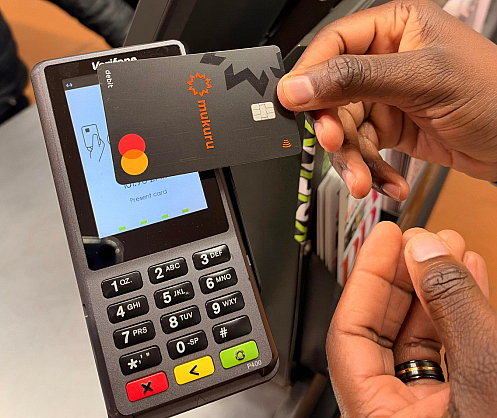
Card acceptance is fully integrated with the POS system, meaning customers can tap their cards and complete transactions within seconds. This helps taverns to reduce the volume of cash handled, lowering the risk of theft and the costs associated with cash counting and banking.
Funds from card sales are settled directly into a digital wallet, giving tavern owners the ability to pay FMCG suppliers electronically for stock purchases. This creates a more efficient supply chain, ensures faster restocking, and removes the need to store large amounts of cash on the premises.
The POS systems also feature built-in inventory management, providing real-time tracking of sales and stock levels. Tavern owners can analyse trends, optimise pricing, and identify breakages or losses. By gaining these insights, they can make informed purchasing decisions, prevent stock shortages, and protect margins.
“One of the biggest benefits of digitisation is that it establishes an electronic record of transactions,” says Thomson. “This puts tavern owners on the path to formalising their operations, making it easier for them to access credit for working capital or expansion.”
Kazang supports this progression through Kazang Capital, a merchant-funding solution developed in partnership with TymeBank. Based on the trading data captured through POS devices, tavern owners can qualify for pre-approved advances to expand, restock, or upgrade their businesses.
“Many tavern owners dream of adding a pool table, purchasing extra refrigeration, or taking advantage of bulk-buy discounts from suppliers,” Thomson adds. “With access to affordable, short-term finance, they can make these improvements and grow their customer base.”
By combining tools for payments, supplier management, inventory tracking, and working-capital access into one cohesive solution, Kazang is helping to create a full fintech ecosystem for the tavern economy.
“Digitalising the tavern sector not only helps individual business owners to grow and thrive,” says Thomson, “but also strengthens the wider township economy. Each step towards digital adoption enhances financial inclusion and builds a more resilient, connected, and cash-secure ecosystem for the communities these taverns serve.”