
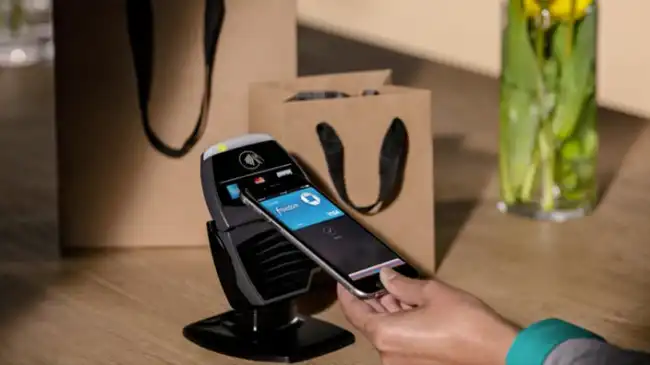
Contactless payment is shifting retailer and consumer behaviour across Europe. ‘Tap and go’ introduces a whole new psychology, as it removes a number of physical steps when we pay in more traditional ways. The “pain of paying,” as behavioural economist Dan Ariely explains, is a very conscious moment in the physical payment process that can keep our spending levels in check.
With the advent of card payments, the feeling of exchanging ‘real’ money has started to fade away. Contactless eliminated the feeling of real money in our hands and the physical sense of financial management. And while CHIP and PIN payments still involve a moment of concentration – after all, one has to input a PIN into the terminal to validate a transaction – contactless makes spending more abstract, increasing the risk of making us lose control over how much we actually spend.
Yet, according to a recent Verifone survey, consumers are embracing contactless – 57% of UK consumers are either regular or occasional users of contactless payment systems, and more are planning to try it out in near future. This appetite is fueled by the retailers and consumers’ ease of use when interacting with the technology and its increasing efficiency and speed to paying.
It should be no surprise that convenience and speed of transaction play an important role when it comes to payment adoption and acceptance of new payment behaviour. A quick and effective transaction can be a major source of satisfaction for consumers. Speed in particular is a key factor when it comes to payments – a recent YouGov survey showed that 59% of people would delay purchase because of the size of the payment queue. With an average contactless transaction taking just a few seconds and no need to enter digits, the benefit for consumers becomes very clear.
When the technology first emerged it was deemed insecure by some industry commentators, who envisaged contactless cards becoming targets for thieves or, worse, making unintended payments by accidentally interacting with NFC-enabled devices. Yet, and security doesn’t seem to be a major consumer concern when it comes to contactless. Contactless remains one of the most secure methods of payment and fraud levels are marginal (0.007% of contactless card spending in 2014.
The consumer confidence in contactless comes from the feeling of familiarity. The fact that transactions take place on a payment terminal – the same device as used for contact transactions, and in a familiar retail environment, plays a big role in consumer and merchant confidence in contactless payment.
Contactless is also great news for retailers and brings with it multiple benefits. It helps generate more sales and greater footfall, as it eliminates the need to handle cash for both the merchant and the customer. It also secures what could have been a missed sale, in the case of a customer not having cash or not wanting to make a trip to the ATM. With the contactless spend limit in the UK rising to £30 and the average debit and credit card transaction in a supermarket worth just over £25, according to the UK Cards Association, contactless is well-placed for further growth.
All of these factors make contactless difficult to resist and it’s quickly becoming a normal behaviour. One can’t argue with its efficiency and security. And while payment will always remain an aversive event in the mind of consumers – after all it means giving up money which, in turn, relinquishes opportunities for other purchases – the more convenient technology can make it for us to pay, the happier we will be to use it.
It’s clear ‘tap and go’ is the way to go.